Surfaces That Shine: The Evolution of Countertops in Modern Homes
Few design elements define a home’s personality as powerfully as the countertop. Once a purely functional surface, it has evolved into a statement of taste, technology, and lifestyle. From humble beginnings in natural stone to the sophisticated engineered materials of today, countertops have become central to how we experience kitchens, bathrooms, and living spaces. The evolution of these surfaces mirrors our changing priorities — durability, beauty, sustainability, and individuality.
From Utility to Design Statement
In earlier decades, countertops were chosen primarily for practicality. Formica and ceramic tile dominated the mid-20th century, valued for their affordability and ease of maintenance. Over time, homeowners began seeking surfaces that could reflect personal style and architectural character. This demand gave rise to materials like granite, marble, and quartz, each offering unique textures and visual depth. Today’s countertops are both workspaces and works of art — blending aesthetics with innovation.
The Rise of Engineered Surfaces
The last two decades have seen a revolution in engineered surfaces. Quartz and porcelain composites have surpassed natural stone in popularity, offering unmatched durability and design versatility. Unlike natural materials, engineered slabs maintain consistent color and pattern across large installations, reducing waste and simplifying design coordination. They resist stains, scratches, and heat — making them ideal for the demands of modern living.
Design Trends Shaping Modern Countertops
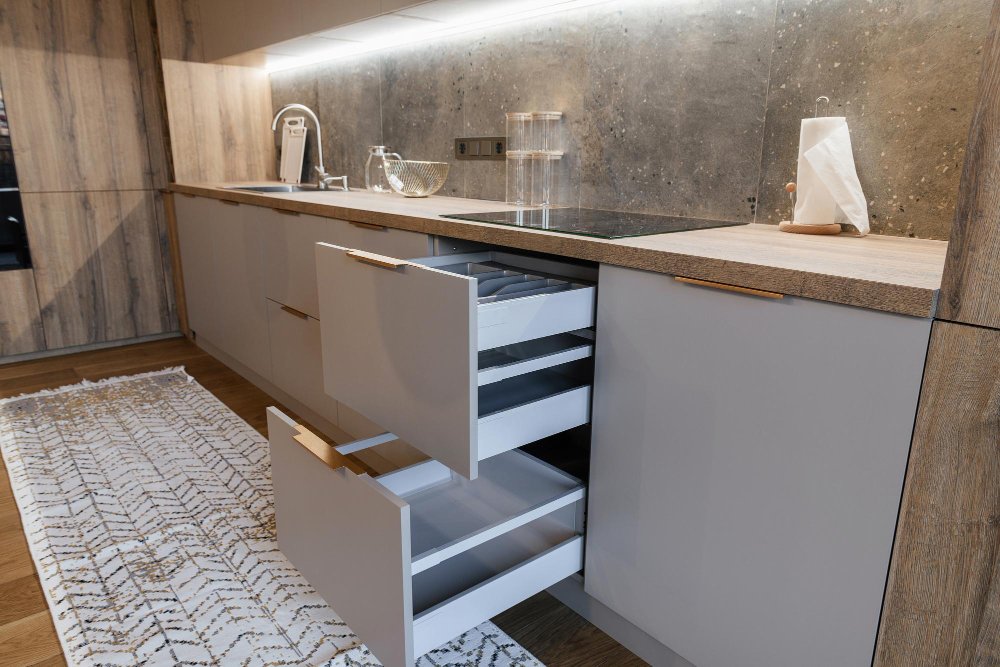
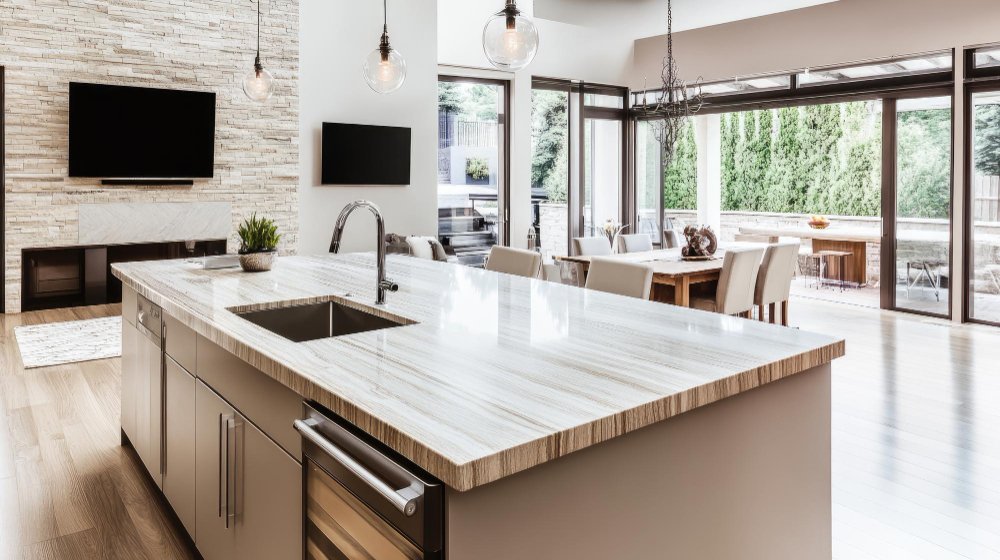
Contemporary homeowners are gravitating toward minimalist designs that emphasize clean lines and continuity. Waterfall islands, full-height backsplashes, and integrated sinks create seamless transitions that feel modern yet timeless. Matte finishes, bold veining, and natural tones dominate current design palettes, while technology allows for custom textures and edge profiles that push creative boundaries.
- Matte and Honed Finishes: Softer sheens offer an understated luxury.
- Thinner Profiles: Sleek 2cm slabs are trending for minimalist aesthetics.
- Integrated Design: Matching surfaces across counters, walls, and floors create harmony.
Functionality Beyond the Kitchen
Countertops are no longer confined to kitchens. Homeowners are incorporating them into laundry rooms, home offices, bars, and bathroom vanities for consistency and cohesion. Durable surfaces like quartz and Dekton perform well in moisture-prone or high-traffic areas, proving that design sophistication can coexist with practicality throughout the home.
Eco-Friendly Choices for Conscious Living
As sustainability becomes a defining factor in home design, eco-friendly countertop materials are gaining traction. Recycled glass composites, reclaimed wood, and low-VOC engineered quartz provide both visual appeal and environmental responsibility. Manufacturers are adopting cleaner production methods, reducing water waste, and improving recyclability — all contributing to greener, healthier homes.
Technology Meets Design
Modern countertop fabrication is as much about technology as design. Digital templating ensures precision cuts that align perfectly with cabinetry and fixtures. Advanced sealing methods and UV-cured finishes enhance durability, while antimicrobial surfaces are becoming a norm in post-pandemic design. Some luxury kitchens even integrate wireless charging pads or LED accents directly into the countertop surface — a glimpse into the future of functional design.
Color and Material Coordination
One of the most significant aspects of countertop design is its relationship with other materials. Coordinating stone hues with cabinetry, flooring, and lighting ensures a cohesive visual story. Designers often use contrast — dark countertops against light cabinetry or vice versa — to define zones and add depth. The key is balance: the countertop should anchor the space without overwhelming it.
Maintenance and Longevity
Advancements in material science have made countertops easier to maintain than ever. Quartz and porcelain require no sealing, while high-performance laminates resist heat and scratches. Regular cleaning with mild soap and water preserves the finish and extends lifespan. Choosing quality materials and professional installation guarantees years of worry-free enjoyment and enduring beauty.
Customization: The Future of Countertops
Personalization is driving the next phase of countertop innovation. Homeowners are experimenting with bold colors, mixed materials, and custom inlays. Digital printing allows for unique patterns that mimic stone, wood, or even metal. Customization turns countertops into artistic expressions — where every kitchen or bathroom becomes a reflection of the homeowner’s taste and story.
Conclusion: The Surface of Modern Living
Countertops have come a long way from utilitarian beginnings to become defining elements of modern home design. They represent the intersection of art, science, and lifestyle — durable enough for daily life yet beautiful enough to elevate any room. As technology and sustainability continue to evolve, the countertop will remain a symbol of modern sophistication — a surface that truly shines.