Countertops are one of the most visible and functional surfaces in any kitchen or bathroom. They affect durability, aesthetics, and the overall design of a space. Homeowners researching how thick is a countertop are often trying to determine which thickness provides the ideal balance between style, strength, and budget.
Although countertop materials vary significantly, thickness is one of the most important factors influencing appearance and performance. The right selection can create a luxurious focal point while supporting everyday activities for many years.
This guide explains standard countertop thicknesses, material differences, and how homeowners can confidently choose the right option.
Why Countertop Thickness Matters
Thickness affects both functionality and design.
It Influences:
- Structural strength
- Visual impact
- Installation requirements
- Overall project cost
Choosing the correct thickness improves long-term performance.
Standard Countertop Thickness Measurements
Most countertops are available in two primary sizes.
Common Thicknesses Include:
- 2 centimeters (¾ inch)
- 3 centimeters (1¼ inches)
These dimensions apply to many popular materials.
2 cm Countertops Explained
Two-centimeter countertops are thinner and lighter.
Advantages Include:
- Lower material costs
- Easier installation
- Modern appearances
Additional support may sometimes be necessary.
3 cm Countertops Explained
Three-centimeter slabs are thicker and more substantial.
Many homeowners researching how thick is a countertop prefer this option for its premium appearance.
Benefits Include:
- Greater durability
- Luxury aesthetics
- Reduced support requirements
It remains a popular choice for kitchens.
Thickness by Material Type
Different materials have varying standards.
Quartz
- 2 cm
- 3 cm
Granite
- 2 cm
- 3 cm
Marble
- 2 cm
- 3 cm
Laminate
- Typically thinner constructions
Material choice influences design possibilities.
Kitchen Countertop Recommendations
Kitchens require durable surfaces.
Many Professionals Recommend:
- 3 cm quartz
- 3 cm granite
These options withstand heavy daily use.
Bathroom Countertop Recommendations
Bathrooms have different requirements.
Popular Choices Include:
- 2 cm quartz
- 2 cm marble
Bathrooms typically experience lighter use.
Edge Profiles Affect Appearance
Edge styles can alter perceived thickness.
Popular Profiles Include:
- Eased edges
- Beveled edges
- Bullnose edges
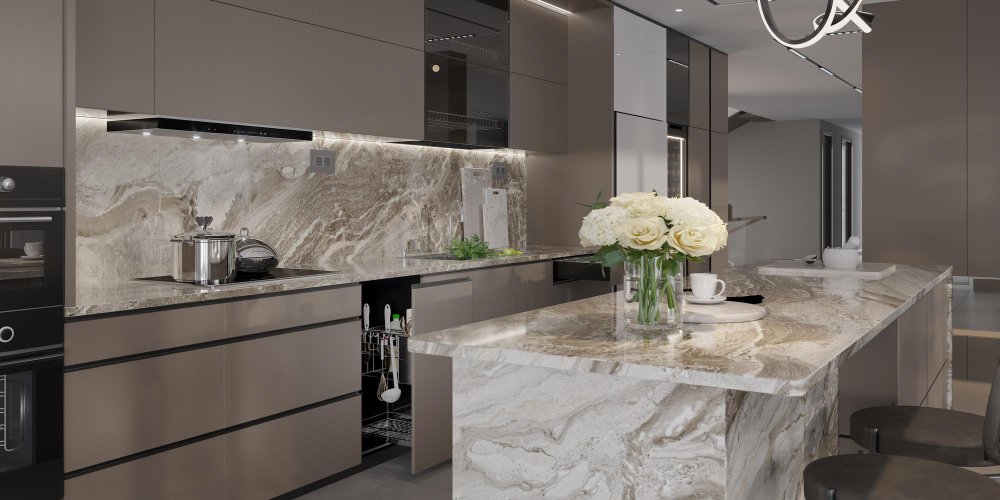
- Waterfall edges
Edge selection influences overall aesthetics.
How Thickness Impacts Cost
Thicker slabs generally cost more.
Factors That Affect Pricing Include:
- Material selection
- Fabrication complexity
- Installation requirements
Larger projects increase overall expenses.
How New Countertops Increase Home Value
Updated kitchens consistently attract buyers.
Benefits include:
- Luxury appearances
- Improved functionality
- Enhanced durability
- Greater buyer confidence
Countertops remain one of the most valuable upgrades.
Professional Installation Matters
Expert installation protects your investment.
Professionals Ensure:
- Accurate measurements
- Proper support systems
- Level installations
- Secure seams
Poor installation may lead to expensive repairs.
Many homeowners researching countertop thickness guide solutions discover that professional installation is just as important as material selection.
Questions Homeowners Should Ask
- What is my remodeling budget?
- Which material do I prefer?
- How much daily use will the countertop receive?
- Do I prefer modern or luxury designs?
- Will I install a waterfall edge?
These answers simplify decision-making.
Common Mistakes to Avoid
- Choosing thickness based only on price
- Ignoring cabinet support requirements
- Overlooking edge profiles
- Skipping professional installation
Proper planning prevents costly issues.
Final Thoughts
Understanding how thick is a countertop helps homeowners make smarter design and budgeting decisions.
Both 2 cm and 3 cm options offer excellent performance when paired with the right materials and installation methods.
By researching how thick is a countertop before starting your remodeling project, homeowners can create beautiful, durable surfaces that deliver lasting value and everyday functionality.